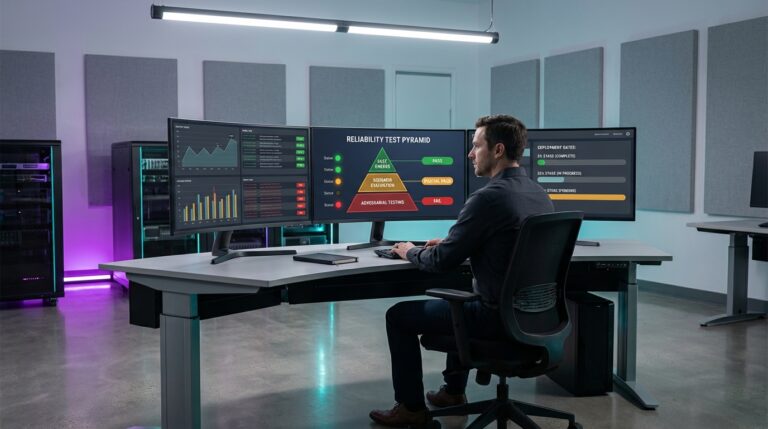

Codex-style AI coding tools are multipliers, not management systems. This post outlines a practical operating model for AI-assisted development: three risk-tiered work lanes, separation of generation from acceptance, decomposition-first workflows, and balanced metrics that track both velocity and reliability.
AI coding tools like Codex are multipliers, not management systems. Teams that want durable velocity gains need an operating model that defines where AI contributes, where humans decide, and how quality is verified before code reaches production.
AI coding tools have crossed an important threshold. They are no longer novelty assistants for quick snippets. They are now part of real engineering workflows, shaping ticket throughput, code review load, and the pace of delivery decisions. That shift creates opportunity, and pressure, at the same time.
The pressure shows up in one recurring leadership mistake. Teams adopt a powerful coding assistant and assume capability equals strategy. It does not. A 2024 GitClear analysis of 150 million lines of code found that AI assisted codebases showed a 39% increase in code churn, suggesting generated code is often revised or reverted shortly after being written. Tools can accelerate output, but without workflow discipline they also accelerate inconsistency, review debt, and operational risk.
Here is the model that consistently works in organizations trying to move from experimentation to dependable shipping velocity.
What Happens When Teams Adopt AI Tools Without a Workflow?
When teams first adopt AI coding assistants, velocity usually spikes. Prototype work moves faster, repetitive tasks get automated, and engineers can explore more options in less time. Leaders see the initial lift and often assume broad rollout is the obvious next step.
Then the hidden drag appears:
- PR volume increases faster than senior review capacity.
- Code style and architecture drift across contributors.
- Tests are present, but shallow, because generated code can look complete while skipping edge conditions.
- Teams spend more time reconciling output than they expected to save.
None of this means the tools failed. It means the adoption plan ended at enablement. Good AI coding outcomes require governance that is lightweight enough to preserve speed, and explicit enough to preserve standards.
Define a Three Lane Work Model
The simplest way to regain control is to classify work before the model starts generating code. I recommend three lanes, each with different AI permissions and review expectations.
Lane 1, Low Risk Throughput Work
Refactors, test scaffolding, UI polish, documentation updates, and predictable integration glue. This lane is where AI should run aggressively. Allow broad usage, fast iteration, and streamlined review. The goal is time recovery for your senior engineers.
Lane 2, Core Product Logic
Revenue related workflows, permission logic, data transformations, and user critical behavior. AI can assist, but generation should stay constrained to well defined subproblems. Reviews should verify intent alignment, not just syntax correctness.
Lane 3, High Impact or Regulated Paths
Security sensitive code, billing, compliance handling, identity systems, and irreversible operations. AI can support analysis, test design, and documentation, but human authored or human curated implementation should remain the default.
This lane model gives leadership a clear answer to a common question, “Where should we let AI run free?” The answer is, nowhere by default. Let it run fast where risk is low, and deliberately where risk is meaningful.
Separate Generation from Acceptance
Most quality failures come from one structural issue. The same engineer who prompts the assistant also decides whether the result is production ready. That is efficient, but it collapses quality control.
High performing teams separate generation from acceptance. The author can use AI heavily, but merge readiness is determined by explicit acceptance gates:
- Behavioral tests cover success, failure, and edge conditions.
- Interfaces and contracts match agreed schema definitions.
- Observability hooks are present for operational debugging.
- Security and permission assumptions are reviewed.
- Rollback path is clear for deployment.
Notice what is absent from this list, “Does the code look smart?” Generated code often reads confidently. Confidence is not quality. Acceptance must be evidence based.
Use AI for Decomposition First, Code Second
One of the biggest productivity gains comes from changing the order of operations. Many teams jump straight to “write this feature.” A better pattern is to ask AI to decompose work before implementation begins.
A strong decomposition pass should produce:
- A breakdown of subtasks with dependency order.
- A proposed test matrix before code generation.
- Risk flags for security, data integrity, and migration complexity.
- A recommendation for which tasks belong in each lane.
This turns AI from a code printer into a planning accelerator. In leadership terms, that shift matters because it reduces rework loops. The team aligns on intent and boundaries first, then generates implementation inside that frame.
If you already use structured delivery methods, this maps directly to a phased execution approach. You can plug it into your existing delivery workflow instead of creating a separate AI process that no one maintains.
Constrain Tool Access with Intentional Interfaces
As coding assistants become more agentic, tool access becomes the next risk frontier. Giving an assistant unrestricted access to repos, ticketing systems, production telemetry, and internal docs can speed up work, but it can also widen your blast radius.
Leadership teams should require intentional interfaces:
- Read and write scopes tied to role and task context.
- Environment separation for development, staging, and production actions.
- Audit logs for high impact tool calls.
- Guardrails that prevent irreversible actions without confirmation.
The principle is straightforward. Expand capability through controlled interfaces, not through broad trust assumptions. This is the difference between scalable automation and preventable incidents.
Coach for Judgment, Not Just Prompt Fluency
Most enablement programs focus on better prompts. Prompt skill matters, but it is not the primary constraint at team scale. The real constraint is engineering judgment: knowing when to trust generated output, when to challenge it, and when to rewrite it.
Managers should coach around four judgment habits:
- Hypothesis first: define expected behavior before generation.
- Counterexample search: actively look for where the generated approach fails.
- Contract thinking: verify inputs, outputs, and side effects explicitly.
- Operational ownership: design with support and incident response in mind.
These habits keep teams from becoming passive operators of a tool they no longer fully understand. They also build confidence with stakeholders who care less about how code was written, and more about whether the system is dependable.
What Metrics Should You Track for AI Coding Adoption?
If you only track lines of code, PR count, or raw cycle time, AI adoption will look successful long before quality stabilizes. The DORA research program (Accelerate, 2018) identified four key metrics that predict software delivery performance: deployment frequency, lead time, change failure rate, and mean time to recovery. You need a balanced metric set that captures both speed and reliability.
Useful leadership metrics include:
- Review time per PR, split by lane.
- Escaped defect rate by feature area.
- Change failure rate after deployment.
- Rework ratio, measured as follow up fixes within two sprints.
- Engineer confidence trend, collected through lightweight retros.
When these metrics improve together, AI adoption is maturing. When speed improves but rework and incidents rise, you are borrowing from future capacity.
A Practical 30-60-90 Day Adoption Path
For teams that want momentum without chaos, this sequence works well:
Days 1 to 30: Define lanes, acceptance gates, and baseline metrics. Run pilots with a small group of engineers on low risk work.
Days 31 to 60: Expand to core product teams, add decomposition first workflows, and standardize review checklists for Lane 2 work.
Days 61 to 90: Introduce controlled tool interfaces for agentic patterns, tighten auditability, and review metric trends for policy adjustments.
This is fast enough to show value in one quarter, and disciplined enough to prevent the common quality collapse that follows unmanaged scale.
The Bottom Line
Codex style tooling can absolutely improve engineering outcomes. The teams that benefit most are not the ones with the most aggressive usage. They are the ones with the clearest operating model. They define risk lanes, separate generation from acceptance, enforce contracts, and coach for judgment as a core engineering skill.
AI can help your team write code faster. It cannot decide your quality bar, your release discipline, or your accountability model. Leadership still owns those choices. Make them explicit, and AI becomes a durable advantage instead of a temporary spike.
Planning an AI coding rollout and want it to improve velocity without sacrificing quality? Let's talk.
Related Posts

Why AI Pilots Matter Before Full Rollout

Your Agentic AI Is Not Evil, It Is Just Over-Permissioned