
Rapid global change can feel overwhelming, but anchoring yourself to core principles like empowering wisdom and igniting courage helps you navigate transformation productively. This blog series explores how The Great Reset will reshape industries, labor markets, ethics, and society, equipping technology leaders to understand and engage with these changes rather than resist them.

The Age of Rapid Change
We are living through one of the most compressed periods of technological and social transformation in human history. The pace of innovation across artificial intelligence, robotics, biotechnology, and quantum computing is not just accelerating — it is compounding. Each breakthrough amplifies the next, creating feedback loops that outstrip our traditional frameworks for understanding change.For technology leaders, this creates a paradox. The same forces that generate opportunity also generate uncertainty. Organizations that once planned in five-year cycles now struggle to forecast twelve months ahead. The instinct is often to retreat into what is familiar, but the cost of inaction grows steeper by the quarter.What Is the Great Reset?
The World Economic Forum introduced the concept of The Great Reset in response to the cascading disruptions of recent years — pandemic recovery, supply chain fragility, climate volatility, and the rapid democratization of AI capabilities. At its core, The Great Reset argues that incremental adjustments are insufficient. The scale of change demands fresh thinking about how economies, organizations, and societies operate.This is not a single event but an ongoing recalibration. Industries that thrived under previous assumptions — about labor markets, about data ownership, about the pace of automation — are discovering that those assumptions no longer hold. The organizations that will lead through this period are those willing to question their own operating models before the market forces them to.Why Should Technology Leaders Pay Attention?
The Great Reset is not an abstract macroeconomic concept. It has direct implications for how technology leaders build teams, allocate budgets, and evaluate strategic bets. Consider three specific dimensions:First, **talent and workforce transformation**. Automation and AI are not replacing jobs wholesale, but they are reshaping the skills that matter. Leaders who invest in upskilling and cross-functional capability building now will have a compounding advantage over those who defer.Second, **ethical governance under pressure**. As organizations deploy AI systems at scale, the governance gap widens. The Great Reset demands that leaders move beyond compliance checklists toward genuine frameworks for responsible innovation — frameworks that can adapt as the technology evolves.Third, **resilience as a strategic asset**. The organizations that navigated recent disruptions most effectively were not necessarily the largest or the best-funded. They were the most adaptable. Building resilience into technology strategy — through modular architectures, diversified supply chains, and scenario planning — is no longer optional.Beyond these three dimensions, The Great Reset also demands a shift in how leaders think about competitive advantage. In previous decades, competitive moats were built on proprietary technology, exclusive data, or scale economics. Today, those advantages erode faster than ever. The organizations that sustain competitive differentiation are those that combine technical capability with strategic agility — the ability to recognize inflection points early, reallocate resources decisively, and execute against ambiguity while competitors are still debating.This is not a comfortable posture for organizations accustomed to predictability. But the evidence from the last several years is clear: the capacity to operate effectively under uncertainty is itself a form of competitive advantage, and one that compounds over time.Transforming Weariness into Engagement
The sheer volume of change can be overwhelming. It is easy to develop what might be called transformation fatigue — a weariness born from constant disruption. But this fatigue often masks something more productive: a desire for clarity and direction.The antidote is not to slow down, but to build better filters. Not every trend demands a response. The discipline of separating signal from noise — identifying which changes are structurally important versus which are temporary cycles — is one of the most valuable capabilities a technology leader can develop.Our Series, Your Compass
This blog series explores different dimensions of The Great Reset. Each post examines a specific domain — from artificial general intelligence and robotics to financial system disruption and environmental shifts — through the lens of practical wisdom. The goal is not to predict the future, but to build the frameworks for navigating it.As we explore these themes, it is worth grounding ourselves in perspectives that connect innovation with sustainability. Julia Watson’s TED talk, “How to Build a Resilient Future Using Ancient Wisdom,” offers a compelling argument for looking backward as a strategy for moving forward.What Comes Next
Our next post focuses on Artificial General Intelligence and Robotics — two forces that sit at the center of The Great Reset conversation. We will examine the challenges, the potential benefits, and the leadership decisions that will determine whether these technologies serve organizations well or create new forms of fragility.Ready to navigate the intersection of technology and transformation? Let us talk.
Continue the series with Embrace Resilience, or jump ahead to see how AGI and robotics are reshaping the landscape.
The pace of change is accelerating. As the World Economic Forum has observed, navigating transformation requires new frameworks for understanding.
The Great Reset demands strategic thinking about technology adoption. TurnerNet’s AI strategy services help organizations navigate this shift.
Related Posts

Why AI Pilots Matter Before Full Rollout
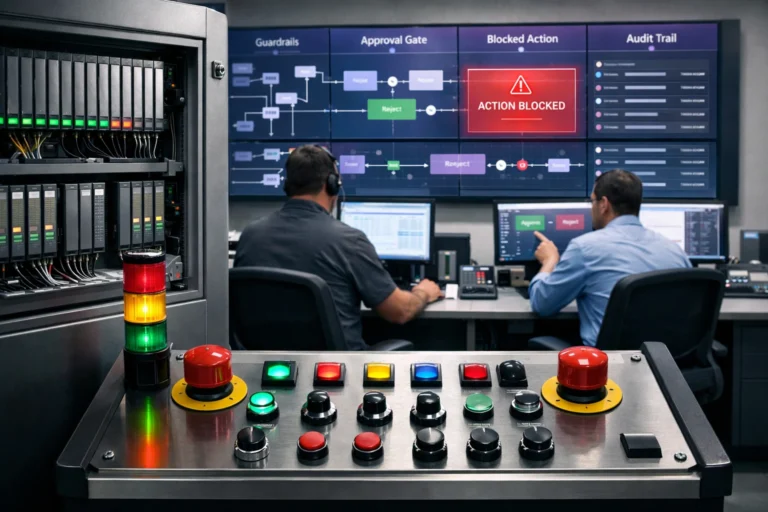
Your Agentic AI Is Not Evil, It Is Just Over-Permissioned



Can’t wait to see what’s in store in this series!
Thank you for your enthusiasm, Heather! I’m glad to hear that you’re looking forward to the upcoming series on The Great Reset. I think it’s an important topic to explore, especially in light of the current global challenges we’re facing. I hope that this series will provide some valuable insights and perspectives on what the future might hold.